
Who Profits From the Gender Wars Industrial Complex?Proto-girlboss Sheryl Sandberg takes on the Manosphere.
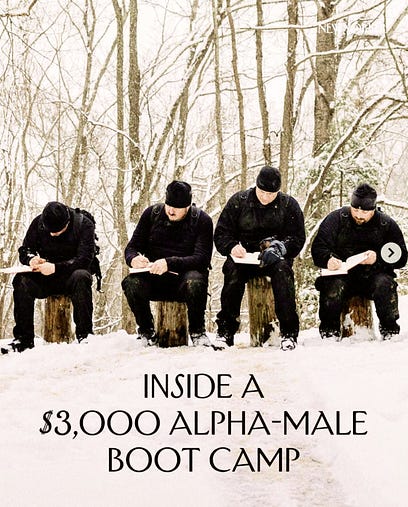
People want to believe that their problems are their own fault. This sounds counterintuitive at first, especially in an era when acknowledgment of systemic issues functions like an all-knowing clapback (you exist in the context of all in which you live, etc.). But I think deep down people hope that isn’t true, because fault implies agency. If you can mess something up yourself, it follows that you can fix it yourself, too.¹ A reliable feature of capitalism is that there will always be someone, somewhere, willing to sell you a better version of yourself. This is the economic animating logic at the center of the so-called gender wars—and what constrains its meager spectrum of offerings. Alpha Males & Manly MenA recent New Yorker piece by Charles Bethea covers the lucrative, dystopian world of “alpha-male camps,” a consumer category native to our cultural and political moment. He tags along for a $3,000, three-day camp called RISE, which consists primarily of activities that call to mind Alabama fraternity pledgeship circa 2013 (trust me, I was there)—being blindfolded and driven around in a van, following a manly dress code, mud-wrestling with the boys, and other humiliation rituals designed to access your Inner Alpha. The soundtrack in the aforementioned vans was a hybrid of loud “construction sounds” and “Jordan Peterson lectures.” Bethea’s reporting reads like King Arthur fetish content, if King Arthur employed a sales team and sold knighthood via multilevel marketing. He rattles off a number of programs of this nature, like Activate Your Alpha ($7,200, Texas), Rise Up Kings ($3,000, Florida and Texas again), or the Men of War Crucible ($10,000, Florida again). The instructors are often ex-military, whether in actuality or just aesthetically. At these three- and four-day events, which can run the cost of a semester at an in-state university, you’ll be “forged” and “stripped” and “pushed” like a “warrior.” The camp directors have a lot of elaborate theories about what’s wrong with Modern Men, and of course, how to fix them. Traits of the so-called alpha male include but are not limited to: a fondness for breast-themed chain restaurants, American-made beer, and “belittling women.” Hell yeah, brother.
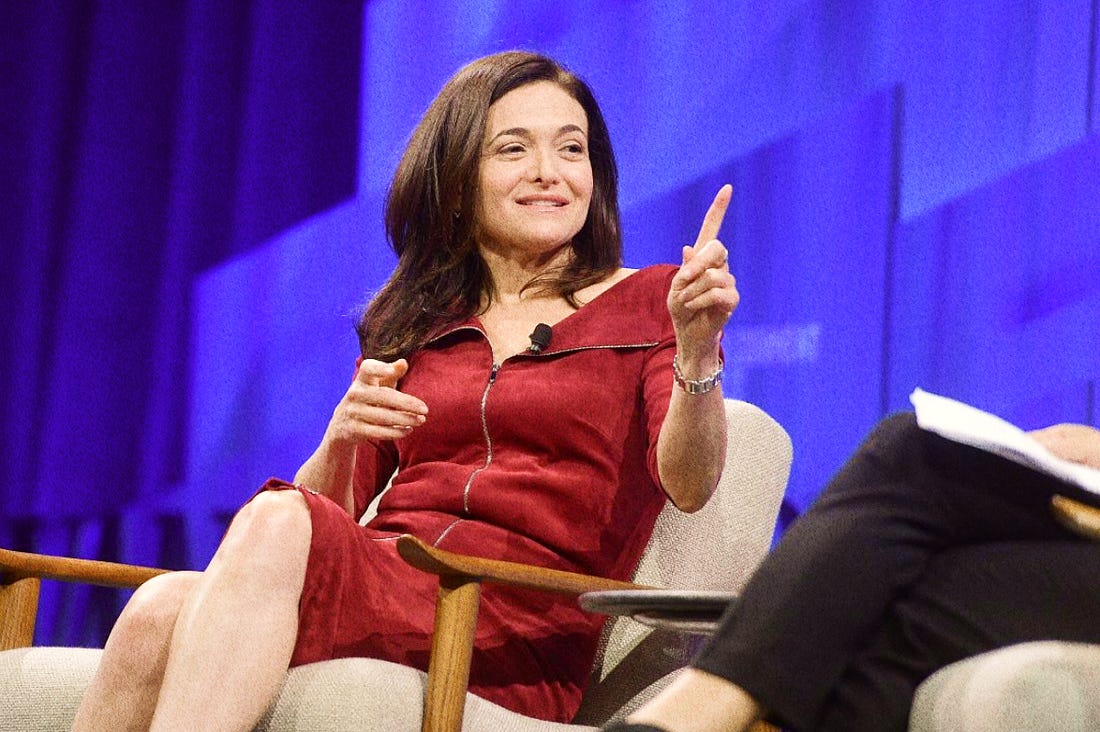
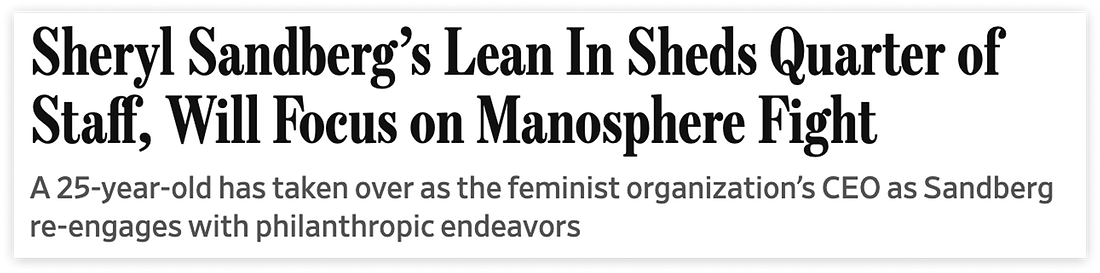
Things take a bleaker turn² in Bethea’s piece when we learn about some of the attendees’ backgrounds, like Adam from Indiana, who recently lost his two-month-old daughter, or James, an unemployed Army veteran who appears to suffer from post-traumatic stress disorder, or even Justin—he ended up leaving and demanding a refund—who was struggling with drug addiction following an abusive childhood. Their stories functioned like a callback to the brief interview in Louis Theroux’s Inside the Manosphere documentary in which a fan of one spotlighted manosphere curio reveals, rather casually, that his brother recently died by suicide. The tragedy plunged him into depression. It was at that depth that he turned to his online alpha mentor, whose extreme emphasis on ownership felt like a life raft in dark waters. The comfort he expresses reminds me of the way I feel—reassured, sedate—watching my favorite Emotional Support Momfluencer pad around her impeccable Arizona McMansion or idle through the Swig drive-through for dirty soda. It’s why I’ve purchased the orange-scented soap and the brown tubing mascara she likes. Life in her videos consists of nothing more than unblemished stretches of polished granite countertops at golden hour and leisurely morning routines which expand toward noon. I know it’s not real, and at the same time, her life sometimes seems more real than my own, which I inhabit unceasingly inside my own home and psyche, both of which are cluttered with the unsightly evidence of life’s messiness. The uncanny, absurdist renderings of alpha men find their loose mirror images in the tradwife phenomenon and girlboss ethos, two supposedly alternate visions of womanhood. That these are often discussed as warring factions on opposite poles obscures the reality that they’re more alike than they are different. Like the alpha males, they are products, not people; marketing concepts calibrated to be legible for very specific demographic groups then accelerated to their inevitable extremes. As silly as the alpha male corner of the marketplace may appear, the fingerprints of its cartoonish ethos are all over the current American political brain trust. Pete Hegseth, our nation’s preeminent slicked-back aspiring fitness influencer, is himself preoccupied with “warriors”: the Warrior Ethos, the War on Warriors, warrior pullups.³ Then there’s Nick Adams, man of two first names, who straddles the worlds of Professional Online Alpha Male influencing by day and international diplomacy by night. He was recently promoted by the president to an even more made-up job, “Special Presidential Envoy for American Tourism, Exceptionalism, and Values.” Reversing the “feminization” of traditionally male spaces, like the workplace, is the crusade du jour: The Trump administration is presently suing a company for hosting a women’s retreat on the grounds that the event “discriminated against male employees,” a Civil Rights Uno-Reverse that accuses the mild, corporate-moderated gender parity championed by Sheryl Sandberg of breaking the law. Girlbosses & TradwivesSpeaking of Sandberg, a recent Wall Street Journal exclusive reported that the ur-girlboss and Lean In author let go of 25% of her staff to reorient the organization toward “fight[ing] tradwives and the manosphere.” As with its manly counterpart, the tradwife municipal code diagnoses the Modern Woman as uniquely unfulfilled and exhausted, and dutifully prescribes the cure. (There doesn’t appear to be any acknowledgement from the former social media executive—Sandberg left Meta’s board in 2024—of social media as the vector for either of these trends.)
Confusingly, elsewhere it’s reported that the way Lean In intends to achieve this goal is to focus on “fighting the gender gap in AI adoption.” The stats that putatively demonstrate the “gap” between men and women’s use of AI in the workplace (78% and 73%, respectively) only make matters fuzzier. Then there’s the labor problem. AI is causing labor market instability, and labor downturns tend to disproportionately impact women, producing the painful irony that Sandberg’s new mission to urge workers to embrace AI may lead to more people, especially women, finding themselves out of work.⁴ Most notably, the tradwife phenomenon often names Sandberg’s Lean In philosophy explicitly as that which its movement rejects, so Sandberg’s recent fatwa against the tradwives brings the battle for the soul of womanhood strangely full-circle.
My Diabolical Lies cohost Caro Claire Burke’s debut novel Yesteryear came out yesterday. It is not the vengeful lib-out that some anticipated. Its chillingly competent antihero, Natalie Heller Mills, is a tradwife influencer, while her former college roommate—a “slutty career girl” named Reena Magliotti—represents the hyperbolized girlboss archetype. “That these are often presented as the only two options for women … emerges as the tragedy at the heart of Yesteryear,” Lizzy Goodman writes for the New York Times in her author profile of Caro. Caro affirms this, pointing out the “false bill of goods” that women—conservative and liberal alike—have been sold: “The point of the book is not that one wins,” she tells Goodman. That it can all be accurately characterized as a “bill of goods” is why Sandberg’s “answer” to the manosphere’s regressive gender ideology is just a different flavor of regression, its imagination limited by the bounds of a branding exercise; “problems” defined only insofar as a bespoke, market-friendly solution (AI, in this case) can be brandished to fix them. Nothing in this narrow universe comes within striking distance of the vast galaxy where all that human pain it claims to fix—insecurity, grief, loneliness, anxiety, depression, precarity, meaninglessness—resides. To the extent this branding exercise succeeds, it does so not because it’s especially convincing, but because we, their customers mired in our ordinary and inescapable human ennui, want their fixes to be real. Brought to You by Betterment
The tax benefits you can claim from contributing to your IRA (whether those benefits are primarily upfront, as with the Traditional, or many years down the road, as with the Roth) are use-it-or-lose-it—if you’re eligible to contribute for 2025, you can put in up to $7,000 (or $8,000 if you’re 50 or older) for one more week, but after that, the window closes. Don’t miss out on tax-advantaged growth (and a potential upfront tax break). If you don’t have an IRA yet, Betterment makes the process quick and utterly painless. Paid client. Views may not be representative. See App Store & Google Play reviews. Learn more.I had a reader reach out and express a mental block around setting up a Roth IRA (the time it would take, the decisions it would require, etc.). It was a good reminder that if you’ve never done something like this before, it can be daunting. The reality is that this is a task that you’ll probably put off for years—and complete within a matter of minutes when you finally get around to it. That’s because Betterment makes investing easy by handling every trade, rebalancing, and dividend reinvestment for you. In some cases, it can be as easy as opening your account, answering a few questions, and transferring the cash. And if you’re self-employed or a side hustler, don’t forget to check out the SEP IRA—particularly if you’re facing down a big tax bill this year. Your contribution might mean significant 2025 tax savings. For the full breakdown on how to open and fund your SEP IRA, check out this deep dive. 🤖 The 2025 IRA contribution deadline is one week away. Start investing for your retirement today with Betterment.
1
This explains enduring popularity of “tough love” financial advice.
2
Some of the activities Bethea described observing sounded like things I did on senior retreat at my all-girl Catholic high school: writing letters to loved ones who hurt you, gestures which symbolized releasing “anger, guilt and shame,” copious amounts of journaling. When James cried to his small group about the demoralizing experience of erectile dysfunction, the leader encouraged the group to support him with a, “We love you, bro. We get it.” Many of the men talk about feeling like they’re failing their wives or children. Regardless, all the shouty mud-wrestling seems like a pretense that enables the more traditional, feminine-coded self-help-y stuff, without feeling all feminine and self-help-y about it.
3
I made that last one up.
4
I’m sure none of this has anything to do with the fact that a month ago Sandberg joined the board of an Nvidia-backed “AI cloud provider.”
5
Feminist scholar bell hooks published Appalachian Elegy in 2012. Four years later, Vance published Hillbilly Elegy, about Appalachia. In 2002, hooks published Communion. Vance’s new book is called Communion. Covert fan behavior?
|







Comments
Post a Comment