
You’re priced out of “looksmaxxing.” That’s the point.Once the exclusive domain of the girls’ club, extreme aesthetic intervention is best understood as a side effect of upper-class ennui.
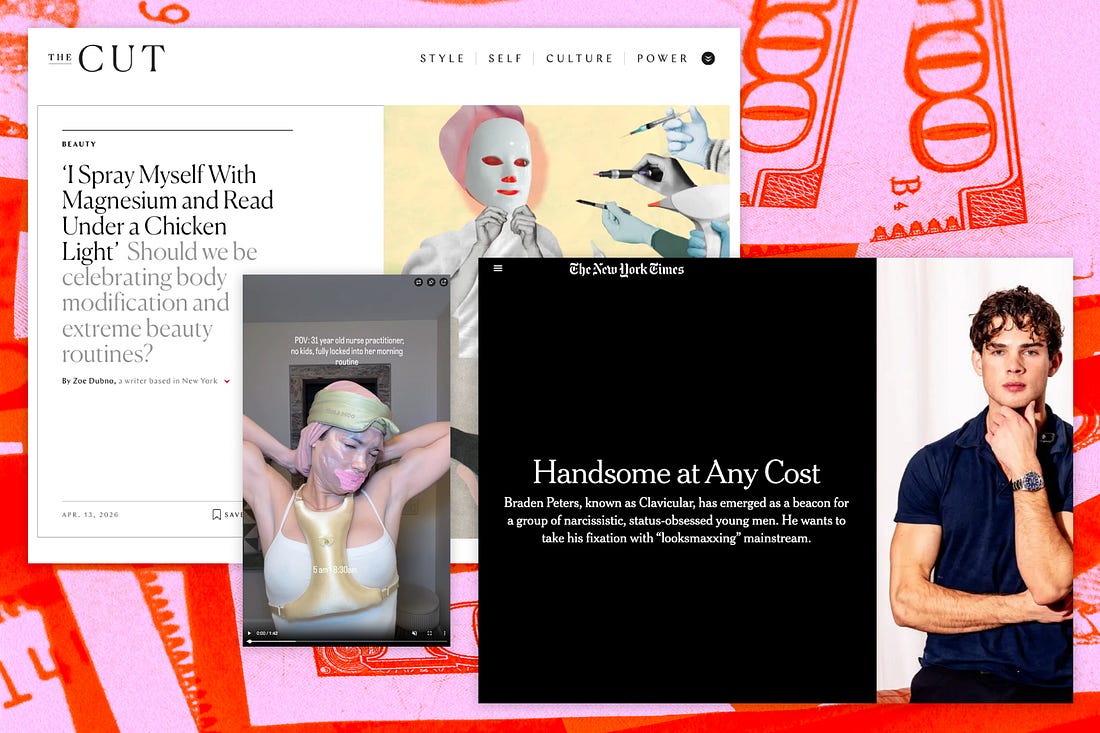
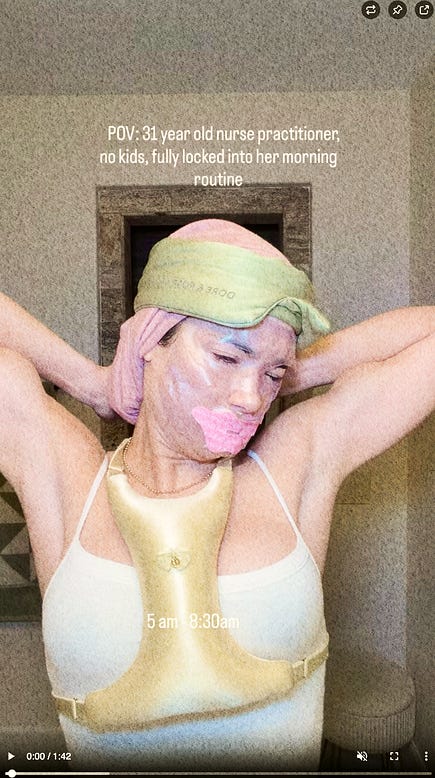
It was all well and good when it was the ladies paying thousands of dollars to have their epidermis medically burned off to produce a marginally smoother appearance or injecting a bacterium-produced¹ neurotoxin into the folds of their face every few months to freeze them in place. That was time-honored feminine maintenance. But the boys taking hammers to their jaws to maximize orbital bone width, preferably resulting in a visible gonial angle (~120°, according to the ChatGPT-inflected LOOKSMAXX BIBLE: UNLOCKING MALE AESTHETIC EXCELLENCE)? It was clear then that a preoccupation with appearance had escaped its gendered containment. Extreme physical modification has, among its adherents, taken on the fervor and reverence of a ritual sacrifice. A 2024 article in the journal Aesthetic Plastic Surgery found that cosmetic procedures were up 40% from pre-pandemic levels. Zoe Dubno’s recent piece in The Cut attributes much of this uptick to a pervasive feeling that we lack control: how the body becomes a site where one can exert one’s will when all else fails. A scarcity-fueled, capitalist marketplace devoid of third spaces is bound, the theory goes, to make at least some portion of us sit on vibrating plates under a chicken lamp every morning because something something lymphatic drainage. A year ago, I would’ve endorsed this analysis as the beginning and end of the obsession with self. I would’ve told you (and probably did, come to think of it) that all this expensive self-care was merely a means for Big Hot to extract what little time and capital you possessed, which of course you would’ve otherwise spent radicalizing yourself with classics like The Feminine Mystique and The Communist Manifesto. Upon another year of reflection, I’m not so sure this tidy and moralized framework reflects the facts on the ground, when one considers who specifically is engaging in this behavior. The cataloged habits and purchasing patterns of the profiled subjects in pieces like Dubno’s often read as though someone were set loose in Sephora on a heroic dose of LSD. One such looksmaxxer, Nurse Miranda,² links her “Everything Shower” products in an Amazon Storefront. The total, Dubno notes, comes to $2,500. Maintaining Nurse Miranda’s supplement routine costs $740 per month. In February, fashion writer Laura Reilly went viral for posting her “American Psycho-level beauty routine,” which included at various points “Botox, Emface, IPL, scheduled Moxi / broadband light, [an] orthodontist, cardiologist, GP, OBGYN, ophthalmologist, dermatologist, plastic surgeon, trainer, and pilates instructor.” That a routine ostensibly devoted to beauty would involve six different medical professionals is notable, given the timing of the revelation: A month before Reilly’s post, Affordable Care Act subsidies had expired. Nearly 5 million more Americans are expected to lose their health insurance this year. Reilly’s current skincare routine is composed of “6-8 steps,” “17 pills” (20 on Mondays), and “a peptide taken subQ” (I believe “subQ” means she injects herself). She reports engaging with “at least 5 high-tech tools” from a “home device library,” which appear to be, mostly, a gaggle of lamps emitting different frequencies of light. She readily admits that she is “n=1,” describing herself in the clinical language of the laboratory as a singular sample, but Dubno reports for The Cut that her conversations with other sheepish Los Angeles women about Reilly’s routine confirmed that, to quote her source, “this is, like, average.”³
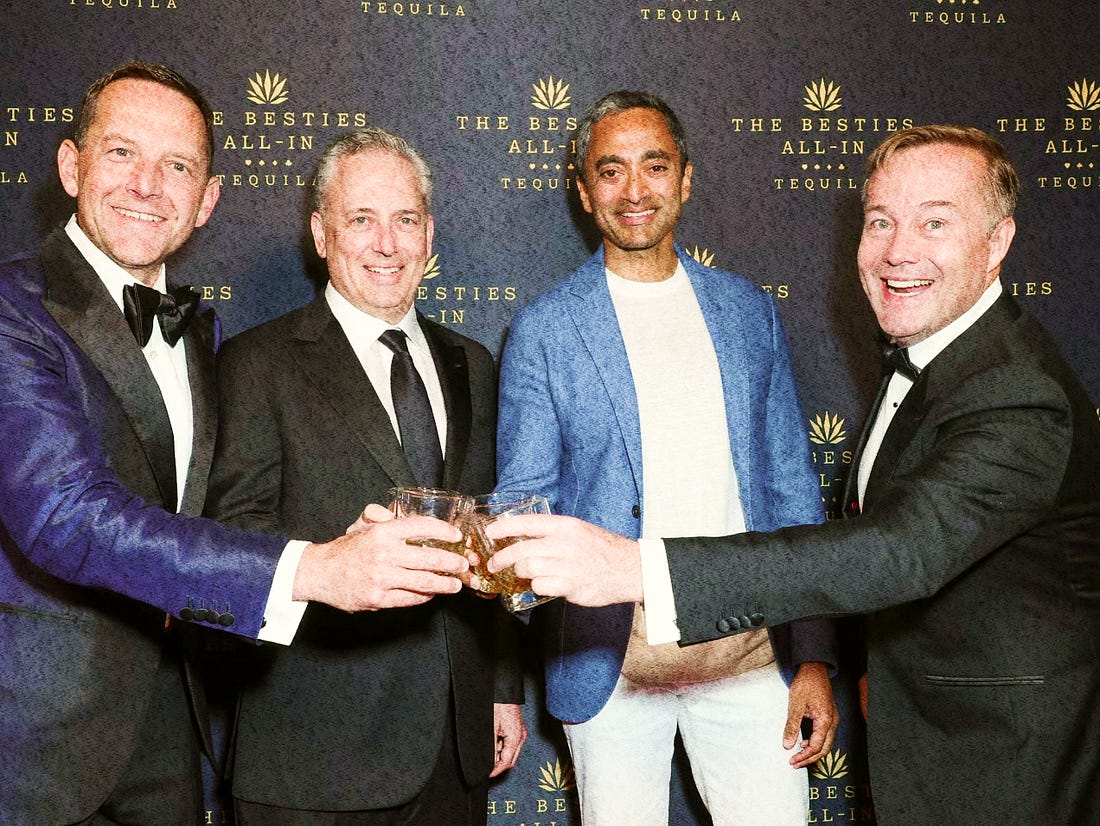
It is most certainly not “average” at a population level, but I buy that it’s average for a certain class of people.⁴ That aesthetic trends have adopted a health-and-medicine tinge at this particular moment—routines that are definitionally exclusive due to their sheer expense—presents an inconvenient question for the common “it’s about a lack of control” hypothesis: If participation is assumed to be a balm for capitalism’s worst offenses, but only the comparatively privileged⁵ (those with thousands of dollars in excess monthly income and platinum PPO health insurance) are participating, then who is in control? Most NPR-listening Americans are likely now familiar with the phrase “K-shaped economy,” so-named for the diverging shape of its graph, in which different groups or industries experience radically disparate versions of reality. The extreme nature of what we’ve humiliatingly agreed to call “looksmaxxing” is less a commentary on the Average Joe’s capitalism coping mechanisms and more an unsettling example of this K-shaped divergence playing out on our faces, where a vanishingly small segment of the population with access to a fleet of concierge doctors, disposable income, and an interest in slowly turning themselves into wax figures is injecting their own ass fat into their dark circles, while roughly one-third of Americans skip the doctor altogether because they cannot afford to go. As canary in the bourgeois anti-aging coal mine Bryan Johnson proved back in 2021, weird shit is wont to happen when society is constructed according to the whims of, oh, I don’t know, the four jabronis who host the All-In Podcast, men who presumably see no issue with the fact that 70% of the country’s wealth is controlled by roughly 20% of its citizens, and on an exponential curve at that.
To fixate on whether all this body modification is actually empowering and liberatory or dystopian and embarrassing is to overlook its more illustrative lens: as a physical manifestation of what happens when resources coagulate in a small segment of society, one that is increasingly bored by its own satiation. The desirous masses, to the extent they express interest in adopting these bloodletting-as-skincare routines and procedures, can be understood not as necessarily desiring the interventions themselves, but instead lusting after the sort of lifestyle and access to resources that would permit them to freely spend thousands of dollars on things like incrementally improving their hairline. What we’ve identified as a story about control is little more than a campy rendering of inequality, where a minuscule fraction of people have too much money and time and therefore must invent new needs to satisfy, while far more people have too little. For everyone else, the consolation prize is that the maintenance itself looks mostly miserable. Brought to You by Betterment
Investing can feel overwhelming, especially toward the start of the year. There’s always a foreboding headline, an extreme prediction, or a new “can’t-miss” opportunity that’s supposedly going to change everything.
This is why Betterment combines done-for-you, low-cost diversified portfolios with the power of automation, so consistency comes naturally. This means:
Feeling confident that your money is where it should be: That’s the Betterment effect. Paid client. Views may not be representative. See App Store & Google Play reviews. Learn more. Betterment does not provide tax advice. Tax loss harvesting is not suitable for all investors. Learn more.
1
Clostridium botulinum, to be specific
2
Not to be confused with Nurse Morgan, a jaunty LA-area drag queen I found whilst looking for Nurse Miranda
3
Editor’s note from Mallory: “I do need to say that I think The Cut is a plastic surgery normalization psyop.”
4
I think this observation is more obvious now that men are embracing a desire for self-optimization with as much fervor as women; before, the conversation was too clouded with light misogyny (women be shoppin’) for class to fully come to the foreground
5
The bootleg Clavicular Looksmaxxing PDF notes that “attractive people” are “perceived as more intelligent, more trustworthy, better leaders,” and “more competent in jobs, sales, and dating,” creating a sort of self-fulfilling prophecy in which those already most able to afford the beauty-routine-as-status-symbol maintenance solidify their positioning
|







Comments
Post a Comment